
Ah, Colorado. It is mid April, and we have April showers
today. White, fluffy showers. Which brings to mind April, 1956, in Toponas,
CO., and a three day blizzard.
Some posts here are things related to the extended tribe I am part of, and occasionally written at the request of family member. This is one such post. Makes good material, at family gatherings, for the tribe’s favorite past time; arguing. It may make
for boring reading for anyone else. You have been warned
.
Most blizzards are a twenty four to thirty six hours events in Western Colorado. This storm was over seventy two hours. When it cleared, all of the roads were blown full. All of the fences were covered. Looking across the ground, you couldn’t tell where the roads began. The ranchers had a terrible time getting feed to their cattle
.
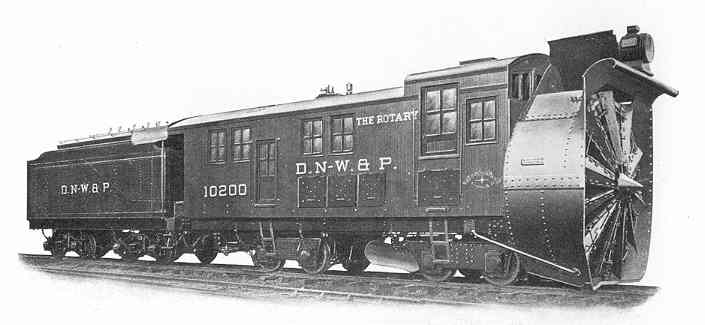
My father was the Section Foreman on the portion of the Denver and Rio Grande railroad from McCoy, CO to Phippsburg, CO. Phippsburg, about 15 miles from Toponas, had a small rail yard and maintenance facility. Sitting in the yard was a steam powered rotary snowplow that hadn’t been used for years. My father, and his section crew, hitched a ride on a State snowplow that was opening Highway 131, to Phippsburg , where they joined other D&RG employees. Somehow, they got the rotary
up and running.
This is about the best I can do to show the equipment and
usage of that era.
The D and RG had gone 100% diesel, but most of the infrastructure to support steam remained. They had ample coal, but water was a problem. Union rules, as to who could do what, were set aside as all of the employees pitched in to get the line open. In the next two days, they got the line open. First, they ran Southbound to Bond, CO where the D and RG mainline was located. Then they turned around and went Northbound to Craig, CO., where the line ended.
When the rotary came by Toponas Southbound, they were
running around ten miles per hour. Coming back, Northbound, they were moving
fast. All you could see was a huge white cloud.
My father loved horsepower. I’m sure he got his hands on the controls of that rotary, and had a grin from ear to ear as he ran it. He, and his crew, came back from Craig on the Yampa Valley Mail, a daily passenger train that had been stuck in Craig. The train slowed, not stopping, and my father and crew jumped off. Of course, they were riding in the locomotive cab.
The school was closed for a week. Located at the Junction of
Highway 131 and Highway 134, it was a two mile walk for me. I had to walk the
railroad tracks to Highway 134, and then on the highway to school. While the
State Highways were soon opened, the county roads weren’t cleared for quite
awhile, and some of the ranch kids had a two week recess. As I recall, we still
had snow in places in June.

A few days after this storm, I saw my father come close to
death on a motor car.
The railroad used a private telephone system. A “dispatcher” would give my father a “block time”, a period when there was to be no trains running his section of track. The system failed. Our house sat right on the tracks. I was on the front porch watching my father approaching on a motor car. Behind him was a locomotive unit coming up fast. Motor cars were very noisy. At the last moment, my father looked over his shoulder and leaped for his life. The locomotive tossed the motor car several
hundred feet down the tracks. Seems the locomotive driver had 1) left
Phippsburg without clearance and 2) wasn’t watching the tracks, per the fireman who was also in the cab.
So ends a bit of family history. Since only two aunts and
one cousin are older than me, the rest of you shouldn’t argue with me about
this. Not that that will stop any of you!
The picture at the start of this blog was a unit in Newfoundland. In my memory, it is very similar to the one operated by the D and RG. The D and RG operated several rotary plows in the San Luis Valley area (Alamosa). Some of these are preserved, and one is on display in Chama, N.M.
I’m happy we are getting moisture; we need it. What I like
about rain is, you don’t need to shovel it.

